Sunday, June 18, 2023

Father's Day

Good morning, Daddy. I miss you. Things got a little crazy after you left. I know you tried to prevent that, but sometimes you can't. Before you left, you said you were worried I lost my way. You were right. I lost my way, and it took a very long time to find it.

I thought I was following you when I focused my life on people who needed me rather than seeking out the people and things that I needed. That was a mistake on my part. I ended up spending much of my life alone because no one needed me forever. Helping people find what they were looking for often meant they weren't looking for me anymore.

I let Mississippi go to crap. I know it wasn't my responsibility to stop that, but I wasn't supposed to turn my back on it for so long. I let a lot of things I care about get in pretty bad shape, and now I have to haul ass to get them back on track.

I never really had anybody to talk to after you died. Many of your friends tried to help me, Robert Wingate, of course, but also Stuart Irby, Warren Hood, and Deaton and Taylor. Heck, J.O. Manning operated on my leg and forgot to charge me. No matter how sincere it is, I'm not very good at taking help.

I ended up spending a lot of time talking to Lance Goss. I know you weren't expecting that. Talking about his life helped me understand my own.

As healthy as he was, George Harmon left not long after you did. I suppose you guys had some project in heaven. We're still struggling to replace him. After a performance like that, how does anyone follow it?

Rowann ended up staying with Suzanne Marrs until the day he died. Both Jane Lewis and Brum Day caught Lou Gehrig's Disease. For a disease that's supposed to be pretty rare, it sure has taken out a lot of Jackson people. Brum was always one of the strongest guys I ever knew. The last time I saw him, he didn't have the strength to keep his jaw shut.

Things calmed down a lot with Jimmy. He died pretty peacefully. Whatever was eating at him never really went away, but it did get a lot less severe.

They ended up driving Missco into the ground after you left. This might be the first time I ever admitted that publically, but it's true. I tried to stop it, but I was outnumbered and in way over my head.  I think, ultimately, you built a chariot nobody else knew how to drive.  I certainly didn't.  

We fought a lot, but in many ways, you were the only one who ever really understood me, even though I think you wanted me to be something I wasn't. It took an awfully long time to understand what I was myself, so it's reasonable that you couldn't see it either.

Things were better when I could see you every day. I was pretty miserable, as you knew, but knowing I could talk to you whenever I needed made things a lot better. I never really found anyone to replace that.

I was born on Father's Day. A fair portion of my birthdays were on Father's Day. Now, I'm here, and you're not. I think the world would have been better off if those roles were reversed. I did everything I could to make sure I got where you are now before my time, but in the end, I decided I wasn't quite done yet.

I'd do anything to see you again, even for an hour. Happy Father's Day, Daddy. This year I've had more Father's Days without you than the ones when I had you. That's not really a milestone I thought I'd face. I miss you.

Saturday, June 17, 2023

Aint From Here

Last night we talked about a guy who is something like a fifth-generation Mississippian and does business here, but for reasons of his own, chooses to no longer live here.  That happens quite a lot.  Mississippi, as you may know, has a shrinking population.  Despite a steady inflow of immigrants from Asia and Central America, there are more native Mississippians either dying or moving than being born, which keeps our numbers in the red.

One of my favorite parts about Thalia Mara is that she's not from here.  She came from a part of the world that generally doesn't think much of Mississippi, and we fairly recently had been in the news for blowing up a synagog and burying civil rights workers from the part of the world where she was coming from in an earthen dam.  She saw something in Mississippi that people who lived here couldn't.  She saw us as a significant place for ballet, of all things, and brought the world to Mississippi to appreciate dance.

The same is true of Catherine and Richard Freiss.  Their friends must have thought they'd lost their minds when they said where they were going to work.  Millsaps has a pretty great reputation, but it's not great enough to hide the fact that Mississippi is the poorest part of the United States, and we have a reputation for doing terrible things to people from their part of the world.  But still, they came, and generations of students from all over the South are the better for it, and students from around the world are better for the work they did while they were here.

Pop Primos came to Mississippi from Greece.  He could have gone anywhere in the world, but he chose to come here.  I guess in Greece, they didn't know that Mississippi was an economically depressed state, totally dependent on a non-sustainable crop and a caste system that was equally unsustainable.  Pop saw something in Mississippi to make his own, and there he built an empire of restaurants and real estate.

Woody Assaf's parents came from Lebanon at a time when maybe things weren't so great in Lebanon, but they weren't much better in Mississippi.  He could have gone anywhere, but he chose to stay here and became a broadcasting legend.

Stuart Good came here with his teenage son from somewhere like Wisconsin.  Jeff Good did really well at Millsaps.  He could have gone anywhere and done anything, but he saw something in Jackson that a lot of people who have been here for generations couldn't see, and that inspired him to start a business here and raise a family here and make himself a part of the fabric of Mississippi.

Peter DeBeukelaer came from Belgium, where his family had a successful business since the civil war.  He had an idea for a new product and wanted a place to make it a reality, and he chose Mississippi even though he could have gone anywhere.  

Mississippi is still a very troubled place.  It probably always will be.  There are still opportunities here.  Sometimes it's hard for the people who have been here for generations to see it, but it's still very real.  There are stories of successful immigrants to Mississippi starting today and tomorrow in areas that those of us who have been here a while might never see.    Sometimes, the keys to success is a fresh pair of eyes.


Monday, June 12, 2023

Birthdays

 In 1974, I turned eleven years old.  Life was pretty good.  I was doing better in school, and I had a paid-up subscription to Famous Monsters magazine.  Birthdays are a big deal to a kid.  I was looking forward to mine.

In 1974, my brother turned seventeen.  In years past, watching him live his life was probably my favorite thing to do.  By 1974 watching him live his life was really very painful.  His part of his generation was characterized by anger and rebellion.  The war in Vietnam was not yet over, and the music was getting angrier and angrier.  Nobody said it, but he had begun having addiction problems the year before.  Some of his friends had it much worse.   I can't really say when his problems turned from addiction to full-on schizophrenia and paranoia, but it was coming.  The police had to bring him home for a few nights, but he didn't get into any real trouble.  His best friend nearly died from eating the wrong kind of mushroom trying to get high.

My father belonged to a group called the Young Presidents Organization, which was basically a group of second-generation business owners who ascended to positions of power at a young age and wanted to make the best of it.  They met three or four times a year, but the summer meeting was always the "family session" where the members brought not only their wives but their children.

In 1974, the trip was scheduled to be five days at the Ponte Vedra resort in Florida.  Since this was the Rebel Chapter of YPO, all the conference spots were in the South East.  Since Ponte Vedra was big enough to host the group, we went there a few times.  

My grandmother lived with us for half the year, so in preparation for getting us all to Florida, my mother had to arrange for my grandmother to fly to my Aunt's house for her half of the year.  My brother was flatly refusing to go to Florida.  Part of his rebellion was being really angry at the establishment, which basically meant my parents.  

My mother had to get my Grandmother to Atlanta, somehow make peace with my brother since he couldn't be left alone, pack my other brother, my sister and me, and herself and my father, and get someone to take care of the dog in the days leading up to our flight to Florida.

Watching her struggle to plan everything, I said offhand, "That's my birthday." and my mother looked at me with a very quizzical look on her face.  "No, no, that's a couple weeks after." She said.

I was ten, turning eleven.  I knew when my birthday was.  I wasn't going to challenge her on it.  She had a lot on her plate, I knew, and family dinners had become very tense between everyone and my brother.  I looked at the dog and said, "You're right.  We'll deal with that later."  and went to my room.

YPO family meetings didn't actually provide much family time.  The grownups had seminars all day and golf and tennis when they weren't meeting.  The entire point of the thing was networking with people other than your children.  Counselors were provided by the resort to take us kids swimming or golfing or some other activity.  One day they took us to a marine park.  I'd seen dolphin shows in Biloxi, so I wasn't impressed.

During one of the tween movie nights, I said to one of the counselors, "Tomorrow is my birthday, but nobody knows."  I'm not entirely sure why I said it.  I had resolved myself to not fretting over it.  My mother would take care of it when we got home, I was sure.  Maybe I just wanted to have something to say to this person in a power position over me.  The movie about the lady trying to raise a great dane and some dachshunds had already been on television and didn't interest me.  I didn't say anything else about it and continued watching the movie.

The counselor I talked to had to be no more than twenty.  She was pretty, but in a natural sort of way; she wore no makeup and always had her hair pulled back.  Her main job was to make sure we didn't drown and give tennis lessons.  The next night, when we gathered for kids' dinner around the pool, she came out with a cake lit up with candles.  It wasn't a birthday cake.  I think they just got a chocolate cake the hotel had for their restaurant and put candles in it.  I was really embarrassed to get so much attention from strangers.  

My parents walked by on the way to one of their functions, and when my mother saw what was going on, she developed this very pained look on her face, then she did a very curious thing.  She looked at me with a very pained look, like I had betrayed her.  I really have no idea what she was thinking.  Clearly, she was hurt, but I started feeling like I was the one who had hurt her, like maybe telling other people it was my birthday was a really bad idea, that it was some sort of private secret between us.

When we got home and got unpacked, my mother asked what I wanted for my birthday.  I listed off the Aurora Monster Models I didn't have yet, so the next day she took me to Play Pen and got the models, paints, the kind of glue that was safe for kids, and a GI Joe Action Set with a white tiger.  Most years, I had some sort of party to mark my birthday, but not that year.  We didn't speak of it again until forty years later.  

I should have told my mother that I understood she was very busy and had much more serious things to worry about than my birthday, but I didn't.  I don't think it hurt me, and I wasn't really angry so much as I didn't really know how to handle it.  In a family of four kids, attention went to whoever was having the biggest emergency, and in 1974, that was never me.

When I turned sixteen, it happened again.  My brother had been in jail, and when my birthday came around, he was living in the mental care facility at St. Dominics.  My family let June go by with no mention of my birthday.  My girlfriend baked me a little cake from a box.  Her father had died just a few months earlier.  I found the body after he'd shot himself.  It was a really sad, uncomfortable birthday.  Just like in 1974, whoever was having the biggest emergency got all the attention, and at sixteen, that was anybody but me.  By then, I learned to take up as little time and space in the family as I could.  I don't blame them for overlooking me because I was doing my best to hide from them.

I never bothered much with birthdays after that.  My mother would always try to take me out to dinner, usually Nicks, because that was the nicest, closest place she could think of.  Some of the time, I would do it, but most of the time, I would say I was going to schedule the dinner with my mother but never would.

Sometimes relationships die of a thousand tiny blows rather than one big one.  My mother created me.  She taught me how to read when my teachers couldn't, but a thousand tiny blows ended up breaking the bond between us.  Her life was very complicated, and I was but one character in a cast of thousands.  There was pretty good proof all around me that there were far worse fates than being overlooked.  

Being the child that didn't need attention meant that if I was quiet enough, I could get away with whatever I wanted.  And did.   Living under the radar like that had its advantages, but I missed some very important lessons on how to share my life with somebody, and that would come back to hurt me later.  

I miss my mother very much.  When she died, it'd been fifty years since I confided in my mother the way a child should.  I was still the child who needed the least attention.  By that time, I was absolutely the child who wanted the least attention.  I don't resent birthdays; I just don't celebrate them.  That ship sailed quite a while ago.


Communists In America

Joseph McCarthy, Roy Cohn, and J Edgar Hoover all tried to prove that Martin Luther King Jr. was a communist but failed.  They couldn't openly destroy the man just for being black, so they found a way to disguise it.  Everybody hated communists, so they were determined to pin that label on him.

King knew people were coming for his neck from a fairly young age, so he made sure nobody could pin that tag on him.  In all honesty, while he did everything he could to improve the fate of the working man, I don't think he was a communist.  I think he was just a liberal, but he believed in private ownership and other capitalistic principles. 

There were communists in the movement, and everybody knew it.  I don't mean left-leaning socialists that the GOP now calls communists; I mean acolytes of Trotsky bent on an overthrow of the government.  I can't say that I blame them.  Communism offered to overthrow their oppressors and guarantee equality with their former masters.  For an African living in America in the twentieth century, I can see how that would be appealing.  

At the time, nobody really knew that Communism couldn't deliver on its promises.   George Orwell had an idea things might go bad for the communists in 1945 when he had the pigs say that some animals were more equal than others.  In China and the Soviet Union, that certainly proved to be true.  It might also have been a clue in 1940 when a fellow revolutionary put a pick into Trotsky's skull.  

Even with all these warning signs, I don't know that I could blame anyone living on the underside of Jim Crow America for clinging to that as some sort of last hope for a better life.  With a big faction of white America calling them communists just for demanding equal rights, I imagine quite a few thought to themselves, "Why not?"

In 1977 when a house painter planted a bomb in Beth Israel Synagog, the reason given was that Rabbi Nussbaum and his followers were communists.   Having known several members of Beth Israel in 1977, I can tell you they absolutely were not communists.  Some were more capitalist than I am.

I'm not sure how communism became the big bad in America.  Rosevelt had broken up the trusts ten years before the Russian Revolution, but I guess there were enough mega bankers left to turn the public tide against it.  A lot of what Huey Long proposed was technically communism, but nobody dared say it because he was so powerful.  

Communism didn't work for the Russians, so I'm pretty sure it wouldn't have worked here.  There weren't ever any real efforts to make America Communist, though, so I don't really get the fear.  Maybe people had called things communist that wasn't for so long that people began to see it as a threat everywhere.  

In the end, all the efforts to destroy King politically were pointless because somebody decided to destroy him mortally.  For a while, calling somebody a communist became something of a joke.  There weren't many real communists floating around America, and nobody cared about the ones that were.  Everything old is new again.  All of our ancient prejudices are bubbling to the surface again, and accusing somebody of being a communist is a serious threat again.  There are fifty-five years between 1968 when Martin Luther King was killed, and 2023.  Fifty-five is a good, round number.  I'd like to say we've made significant advances since then, but that wouldn't be true.

Sunday, June 11, 2023

Evil and Computers

There was a time when I thought we had this xenophobia that strangled America from the beginning on the ropes.  There are evolutionary reasons why we're afraid of people who don't look like us, but for a while, I really thought we'd made progress on it and were learning to transcend our evolutionary prejudices.  I was wrong.  They came back with a vengeance.

Terry Gilliam's treatise on good, evil, time, space, and everything is the 1981 film "Time Bandits."  Because it has a child star and several little people castmates, a lot of people assumed it was a children's film.  It's ever so much deeper than that.  Completely stymied getting his script for "Brazil" produced, Gilliam showed the treatment for "Time Bandits" to George Harrison, who agreed to finance it.

In "Time Bandits," the ultimate evil is played by the brilliant David Warner.  Trapped in hell by the supreme being, Evil sends his minions after the map to time and the universe held by our heroes.  Evil is ready to escape hell, and he believes he knows how to take over the universe: computers.  

In 1981, I was a bit computer mad.  Tom Stemshorn arranged for St. Andrews to have a small computer lab.  A single terminal, connected by modem to the computer at Millsaps, I began a life-long journey of discovery with these machines.  


Early on, I had great hope for the new world computers communicating with modems would bring us.  Slowly at first, but gathering speed now, I learned that, while communicating computers bring great good, they are equally capable of bringing great evil.  In 2023, the greatest medium for the unprecedented growth in xenophobia and outright hate groups has been the internet.  I'm worried it's growing because it allows people to let loose the internal prejudices we all have and lets them find like-minded people.

In the film, the Time Bandits use weapons of war from every age to defeat the ultimate evil.  We don't have that at our disposal.  The only way to counter the hate growing on the internet is with the truth and relentlessly confronting evil with it.  

I don't think this conflict will ever really be over.  I don't think we have that option.  The struggle continues, even on this new battleground.  

Saturday, June 10, 2023

Lauren Stennis Statement of Belief And Intention

 A random Google search returned an unexpected memory today. Lauren Stennis went to Millsaps. Her grandfather was John Stennis. Lauren had a great passion for Mississippi and especially desired for us to break with our Confederate past and change the flag. She had her own design, which I liked very much.

Eventually, there was a referendum to change the flag, which a lot of us had a lot of hopes for that were dashed when the results came in. Fearing reprisals from the NCAA, who were threatening to boycott Mississippi, the Speaker brokered a deal where the legislature would pass a new flag, but as Stennis was far too liberal for their stomach, her design was outright rejected, even though she'd spent ten years fighting for change.

This is a link to Lauren's GofundMe from seven years ago. She raised the money, and ultimately, she got what she wanted, but she never got credit for it, not officially. In my world, Lauren fought for the chance that Mississippi might rise above its past, and in my eyes, she won.

In response to an egregious bill in the Mississippi House, Lauren was raising money for a new Statement of Belief and Intention. The original statement was published in 1968, affirming the position that Jackson should no longer be segregated and signed by some of the most prominent business, educational and legal leaders in Jackson at the time. If you can't read this version, Please follow the link to my Blog, where you can see it in higher detail.


Here is the text version of what appeared in the paper:

These days constitute the swiftest time of change in our memory. Events hurriedly pile themselves upon events. In our business, our professions and everywhere fast-breaking changes require quick answers and quick actions.

We are threatened with a widening chasm between our people in this State and in our City. Yet, here in this State and in this City there is a vast reservoir of good will, compassion and kindness that is genuinely a very part of our being. This vital reservoir of true neighborly feeling, true friendship must be brought to the fore now and without delay.

We cannot sit back and become prisoners of events. We must cope with them firmly and decisively and manage our own destiny. Accordingly, in the set conviction that the great majority of our people, white and black, desire harmony, good order, a decent honorable family life and a chance to better themselves economically, we, the undersigned Jackson business and professional men and women declare we believe in the following principles, and we pledge ourselves to do everything within our power to see that they are carried out:

1: We believe in the essential worth and dignity of every human being and all that such implies.

2: Fair and impartial treatment must be accorded to all citizens in the enforcement and administration of the law.

3: Every citizen of this City regardless of race, creed or color is entitled to equal access to employment as he is qualified by training and experience to perform, and to earn the con-
tinuation of such employment by his own hard efforts.

4: In order that all of our citizens may be qualified for equal employment opportunities, educational opportunities must be available to them on an equal basis.

5: Adequate and properly staffed recreational facilities should be made available for all of with the coming of the summer season, all City swimming pools should be opened. All parks should be open, and should be staffed by competent personnel, and properly equipped to the end that all our people may obtain the maximum benefits from them.

6. Communications between the races should be encouraged en every level of our City. This should include all of us whether we be public officials, civic, business, religious, or professional leaders.

7. There is no place in our city for hate, discord or violence.  No man, whatever his course or whatever his convictions, is above the law. All of our citizens should work untiringly and unceasingly to bring out to the fullest the best in us in the way of kindness, compassion,
friendliness and understanding that we may all progress through cooperation. We owe this to ourselves, our families, the oncoming generations, and the development of all of our talents.

Respectfully Submitted,

(Please refer to the image for the complete list of names.  Many of you will find your parents on it.  Nearly every Millsaps Professor is on it. My own father is not on it.  In 1968 there would have been tremendous pressure on Missco not to appear too radical.  He found ways to express his opinions, though, for one thing, there were no reprisals against any of the Millsaps Professors.  This was also the year that Daddy hired a black woman to be the company receptionist so that the very first face you saw when you entered our building on South Street was a smartly dressed descendant of Mississippi slaves.)  


Justice? Redemption

Every morning, Alexa plays a little tune until I sit up and say, "Alexa, Stop."  Then she says, "Good Morning.  It's six o'clock.  The Temperature is seventy-eight degrees.  Today expect cloudy skies and a high of eighty-four degrees.  "  

Then she plays "Philadelphia Morning" from the Rocky Soundtrack.  That image of Rocky struggling to breathe while he jogs and holding his sides in pain when he reaches the top of the stairs at the Philadelphia Museum of Art is what gets me out of bed in the morning.  Rocky suffered and suffered, but he got better.  That thought inspires me.

A guy like me can stay in bed all day, every day.  I have the kind of mind where I can keep myself intellectually stimulated without ever speaking to another person or seeing the world outside of my room.  The problem is, the world actually is outside of my room.  I can stay in my room forever, but I'll never fulfill the contract of my creation.  My job is to do something to the world, something with the world, not sit in the dark imagining it.  There's an imaginary dog that yips at me whenever I think about forgetting that.

I sent the first chapter of my book to a few people for mostly good reviews.  A few people said, "Uh-oh, I can't believe you're talking about that."  The inciting action in my book is a fictionalized version of something that actually happened.  It's fictionalized mainly because I want a very different ending than what really happened.  I'm also not about the business of exposing people's personal suffering to the world.  There will be quite a bit of suffering in the story, but it's imaginary people, not real people.  I don't think I could do it otherwise.

My first several chapters will be chasing my characters up a tree and then throwing rocks at them, a quote attributed to both Nabakov and Hitchcock.  Hitch probably stole it.  Young people cross several really significant Rubicons as they grow.  The first is learning to walk, then going to school, then puberty, and going to high school and college.  Eventually, they emerge as an adult and start a completely different journey.

Young people arrive at college, often with the wounds inflicted on them before still bleeding, but without the support structure they always had, and sometimes they go a bit mad without it.  

Hurt people hurt others.  Every psychologist will tell you that.  Injured people hurting others and getting hurt themselves is the action that drives my narrative.  Characters not recognizing that they don't have to stay on the road where they find themselves is what sustains it.

In the real world, when bad things happen, people cry out for justice, but they never get it.  I've been thinking about this for a long time, and I don't think I've ever seen a case where justice was served.  

Orestes killed his mother and his uncle to seek justice for his murdered father, who was murdered for taking the life of his daughter Iphigenia; then, he spends three more plays struggling with the gods to try and discover justice.   Arguably, he never does it, but through his efforts, he redeems himself.

That's what I want my characters to do.  I want them to go through hell and then redeem themselves.  The question of justice will hang in the air unresolved.  That's intentional.  


Thirty years ago, Bobby DeLaughter and Ed Peters shocked the world by bringing Bryan De La Beckwith to trial.  Whatever would happen to Bobby in the future, that was a monumental moment in Mississippi history.  De La Beckwith was convicted and died in prison, but was justice served?  We could have burned De La Beckwith at the stake along with all his companions, but would that be justice for the death of Medgar Evers?  Could their suffering replace his loss?  My argument is "no."   Justice is a thing we seek but cannot find.

Redemption is possible, though.  If we put our minds to it, we can each achieve some level of redemption every moment of every day.  A daily struggle for redemption is how we pay back the lord for the air we breathe and the water we drink, and redemption begins with forgiveness.  Not the forgiveness from God, although that's vital, but forgiving ourselves and allowing us to redeem ourselves.

These are the ideas I'm going for.  We'll see how well I do.

In the meantime, I'm having one last breakfast in the little cafe out here.  The food's pretty good.  They'll bring the food to you, but if I let people serve me all the time, I'd never get out of here, and getting out of here is happening really soon.  


Friday, June 9, 2023

The Economic Shortfall in Mississippi

Even though I live in the poorest part of America, I received one of the best possible educations on economics, taught by brilliant, very Christian-thinking people.   Mississippi has some truly brilliant people working on our considerable economic problems.  They're people with varied perspectives and qualifications, but they're all very genuine and all ultimately working for the same goal.  I'm proud to say most are from here.

We're still failing, though.  On every economic metric, we're failing.  The problem we're facing is the human condition is so complex and so nuanced that no economic system or combination of economic systems is capable of meeting all our needs.  Despite our bountiful economic resources, our history and our internal conflicts create such a complicated economic landscape that we're simply not able to provide for our people.

In Mississippi, there is a considerable shortfall between our reach and our grasp.  You won't hear me say this very often, and I don't mean everybody, but there are some very conscientious and Christian people in our Legislature working as hard as they can to elevate us out of the spot we're in and have been for as long as I can remember, but there's only so much they can do.

This considerable gap between what we need and what we have is what keeps me up at night.  The only way we can make sure all the people of Mississippi are clothed and fed and close this gap between what our economy supplies and what our people can provide is with the ancient concept of simple Christian charity.  

When you use words like "charity," for many people, it conjures up images of little old ladies at bakesales or rich people who don't care at black tie events, but it's so much more complicated than that.  Charity is what keeps Mississippi alive.  Nearly everyone on my Facebook list is involved in some form of charity.  Some are involved in EVERY form of charity.  We have such an enormous capacity for human capacity that there are a good dozen or more who are intimately involved in charity for dogs and cats.

My father taught me some very simple lessons.  People will hate me if I'm not humble.  I come from poor farmer stock in Mississippi and poor farmer stock in Scotland and Ireland before that.  I must never try to elevate myself beyond a deep concern for the poorest people in Mississippi.  That's where charity comes in.  As a people, Mississippi may never really be prosperous, but we can be kind.  We can be sufficient so that not even the least of us suffers.  That's where charity comes in.


Thursday, June 8, 2023

Yelp Reviews

 For about a hundred years, I've written restaurant reviews in my journal.  I just never showed anybody.  My goal is to eventually post a really good review for all my favorite restaurants.  If I haven't gotten to your restaurant yet, I will!

My Yelp Page

Lunch Downtown

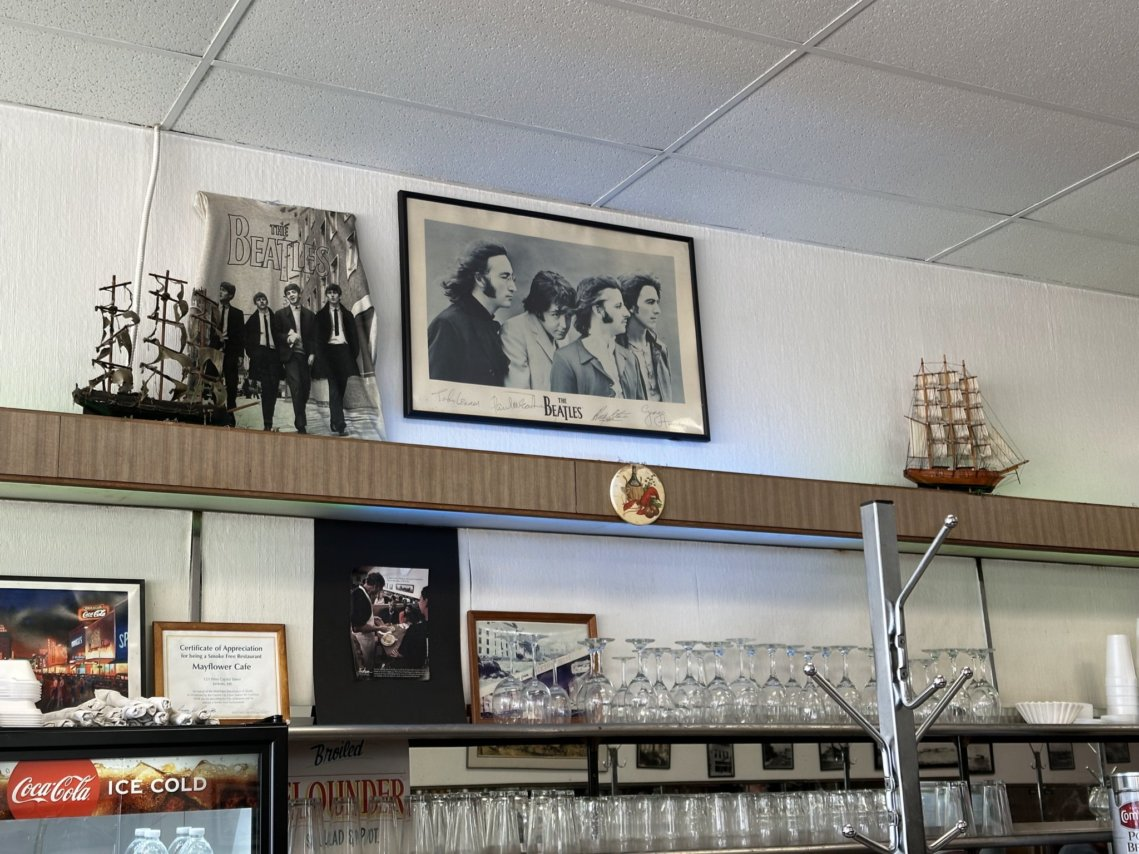
Getting ready for the big move, I went downtown to meet the movers.  Since I was nearby, I went to the Mayflower for lunch.  Since 1975, I've done this maybe seven hundred times.

I've known Jerry for something like forty years.  In that time, there have been maybe eleven encounters when he didn't find something to complain about.  His cousin was like that.  His dad was too.  Greeks are pretty straight shooters.

Jerry's complaint yesterday was that it was a beautiful summer day, a quarter till noon, the IBC was getting ramped up, and his restaurant was nearly empty.  Judge Waller came in.  His dad ate there every day since before he served as governor, so I guess he's just keeping up the tradition.  A couple of three tops came in, and an out-of-town couple who didn't know to order anything with the salad dressing but somehow weren't connected with the ballet.


It wasn't Jerry's fault.  My gumbo and seafood salad was as good as it was the three hundred other times I've had it.  It wasn't the fault of the IBC.  I met with a cluster of dancers having lunch at Millsaps, and they were having a great experience.  Truth be told, parts of Jackson are dying.  Jerry's restaurant is in one of them.

When Jerry was thinking about buying the restaurant from his dad and his cousins, we talked about it a good bit.  He had a great strategy and good financing.  It was a good deal.  Downtown then didn't have any retail traffic to speak of, but it had a lot of people, and his tables were always full.  Some fifteen years into it, Parlor Market moved in and brought Mayflower as much business as they had their own.  It was a good time.  That's when I moved downtown.

Jackson's biggest problem is jobs.  There aren't enough.  All the crime and dropping property values, and rotting infrastructure go back to jobs.  If we had the same employment levels we had in 1980, the Mayflower would be packed.

In 1980, between Missco, McCarty-Holeman, McRaes, and Deposit Guarantee, you were looking at something like twenty-five hundred jobs.  Maybe more.  In 2023, those four companies hired zero people.  That's a number that's kept me awake at night for twenty years.  

Part of the problem is that we've had a massive accumulation of wealth in very few people since Jimmy Carter left office.  The last major anti-trust action was Judge Brown vs AT&T.  That ended in 1984.  Just speaking for our own company, there was really no way we could compete with companies coming into our market with fifteen and twenty times as much capital as we had.  Like McRaes and McCarty-Holeman, we formed a purchasing group with other companies our size.  I was deeply involved in creating it.  With that, we were able to have price parity with Office Depot and Staples for a while, but they had so much money for other areas of how that business reaches the market that we were really probably doomed to failure, no matter what.

The last time this happened, the situation was actually much worse, but we're getting there.  What saved us was Teddy Rosevelt, a Republican, who became the greatest trust-buster in history.  The moves he made and the legislation he passed made it possible for companies like the ones I mentioned to make a profit in Mississippi, which has been the poorest state in the union since the war, the Civil one, not the one in Europe.

A lot of people are going to disagree with the economics of my assessment, but I feel like the evidence is there.

A lot of times, when I mention doing things downtown, I get a handful of responses like, "Aren't you afraid of getting shot?"  Well, I've always been afraid of getting shot.  Hell, listening to TW Lewis and Ed King talk about what happened to them in the sixties, and I don't know that I've ever been safe.  

Jackson has a crime problem that's undeniable, but over-inflating it isn't helping anything.  The Mayflower is a hundred feet from the federal building, two hundred yards from the Governor's Mansion, and two hundred and fifty yards from not only Jackson Police Headquarters but now the Capitol Police Headquarters.  I've lived downtown for fifteen years, and I've never had a problem.

Parts of Jackson are very sick.  Parts of my body are very sick.  Neither of us is dead yet.  The Jackson Police, The Hinds County Sheriff's Department, the Capitol Police, and the Mississippi Highway Patrol have combined efforts to make sure that your experience at the International Ballet Competition is safe and enjoyable.  While you're downtown, eat at the Mayflower and Ironhorse and King Edward and Hal & Mals.  Don't give in to hate and fear.  Even though I'm moving, you'll probably see me around.


Wednesday, June 7, 2023

Two Tiny Opals

I ended up on academic probation in college once because I was enamored with this girl from the Delta, and all we did for six months was smoke weed, drink, and mess around (if you take my meaning.)  

She was stunningly beautiful and exceedingly rich, well-read and quick of wit, but despite all of this in her favor, she had this wounded bird quality about her that is very likely what drew me to her and what drove her passion for not being sober--that and being from the delta where most people are never sober.  Nearly everyone I knew from there had a history of finding different ways to experience the universe, hers included a lot of Budweiser.  

Her laugh attracted me first, then she spilled almost an entire red cup of beer over me on the back patio of CS's one summer.  That's how we became friends.  I'll be friends with anyone who spills beer on me, then spills the rest over it over their own head and laughing to prove they didn't mean any harm.  

She began her career at Millsaps kind of backward by attending the Summer session first and then coming back in the fall.  In the Fall, she failed out of rush.  I don't really know how that happened, except maybe her party-all-the-time attitude in summer school annoyed some of the other girls.  Maybe she spilled beer on them too.  She was something like a quadruple Tri Delta legacy, but we didn't have a chapter yet, and the four we did have, didn't want her.

I can't really say that I was in love.  There certainly would be deeper wells to explore in that aspect of my life in the future.  I was, however, without a doubt, entangled in a very powerful spell.  I would have done anything for her and sometimes did.  When we both were three-tenths of a point away from a goose egg one semester, I pleaded on her behalf and my own with Dean Whitt to let us come back the next semester on academic probation rather than having to sit out a semester. 

It was very important to her that her father not know she had failed a semester.  Much like when she failed out of rush, my shirt was wet with her tears.  That, and the incredible softness of her fingers were probably the heart of our relationship.  While I could arrange that, there was, however, no way to hide the fact from my own father as he was intimately involved in bringing Dr. Harmon and Dean Whitt to Jackson in the first place.

"What happened, Buddy?"

I didn't lie.  There was a girl, and there was an awful lot of alcohol.  It was a moral failure on my part.  With my learning disability, he'd become accustomed to my academic failures, but this was something different.    We thought my days of academic struggles were passed.  A new obstacle arose.  

I approached my friend with the news that she could come back on probation without having to sit out a semester.  I told her things had to be different, that I couldn't spend all night every night drinking and laughing at the way cold cuts exploded when you threw them into a box fan.  I said we had futures to consider, and our parents expected more from us, and this was the right thing to do.  Her response was that we should see other people, and she had already begun.

For a long time, I had this tradition that whenever I broke things off with a girl, I'd buy them a necklace.  Nothing gaudy or even really noticeable, just a small drop, usually with an opal.  I went to Albrittons and picked out a piece that had two small opals in a sculpted gold setting that made it look like they were tiny pears hanging from a tree.  I showed it to my friend Lisa, over in Sanders Hall, explaining that even though she technically had broken things off with me, I still wanted her to have it as kind of a punctuation mark on our time together.

I wrapped it in creamy white paper and took it over to her apartment at the Groovy Grove.  In the interim, she had told me that, instead of coming back to Millsaps on academic probation, she was leaving Jackson and going to Mississippi State, and she was also spending all the time she previously spent with me with a boy I was in kindergarten with.  I gave her the box and said goodbye.  She asked if I wanted to come in, and I said I had to get to work.  My tie was already wilting in the July heat.

There were maybe five or six of these ritualistic necklaces given during my career.  All, very remarkable women.  I'm honestly curious if any of them still exist--the necklaces, not the women.  

They were hardly heirloom pieces.  Neither was I.  The future would bring worse experiences.  This girl really only wanted my time.  All of it--and my attention.  All of it.  I gave it willingly; you would have too if you'd seen her eyes.    This girl never asked me for a dime.  In fact, she usually paid for our trips to the liquor store.  In the future, there would be girls who really only wanted money from me.  Some, quite a lot.  They found themselves in very unstable situations and made a convincing argument that only I could help them, and I did.

In the Summer of 1985, there was none of that.  All this girl wanted was somebody who could keep up with her parties, which I admit was quite a challenge sometimes.  The first time I ever kissed her, her cheeks were still wet with tears.  I never knew what caused them, but there was some demon inside her that was driving all this passion for not being sober.  There was something inside her that caused a wound most people couldn't see, but was all I could see.  

In the end, whatever was eating her, I failed to defeat. That failure hurt a lot more than knowing I'd never hold her again and some other fella would.  I sent her out into the world with two tiny opals shaped like pears and my sincere wish was that whatever was hurting her would stop on its own because I could not stop it, even though I tried.  

My psychologist told me that I shouldn't seek relationships with girls who needed me.  I should focus on girls who enjoyed their time with me, not the ones who sent me on missions.    I told him that I understood what he was saying but that he hadn't seen her tears.  There was no way I could have refused her.  

I would see those tears gliding down many other tender cheeks over the years.  I never got very good at refusing them.   Eventually, I ended the tradition of giving away a tiny gold drop to end a romance.  It was meant to be a really noble gesture but ended up being sort of pointless, especially since none of them would ever be "the last time."  At least two recipients of my pointless gesture read my stuff.  If you're reading this: Hi.  I still remember you.  I remember it all.  

I guess, in the end, that was the point.  Whatever hurt them, I registered it.  I noticed them.  I remembered them.  Nobody should ever go through life without somebody noticing their wounds.  Maybe that's my superpower.   Sometimes, I take inventory of my past loves.  Most of these girls ended up becoming happy.  Some never did.  One didn't make it at all.  Maybe I wasn't supposed to fix them all.  Maybe I was just supposed to remember.


Land of Confusion

Ooh, Superman, where are you now
When everything's gone wrong somehow?
The men of steel, the men of power
Are losing control by the hour

This is the time, this is the place
So we look for the future
But there's not much love to go round
Tell me why this is a land of confusion

While the Lieutenant Governor is a little more than thirteen years older than I am, Speaker Gunn and I are within a few months of being the same age.  That'll be important later.  

The Medgar Ever's Institute sponsored a lecture at Millsaps College featuring Rev. Ed King, Dr. T.W. Lewis, and Jeanne Middleton Hairston yesterday.  The Evers Institute rents space in the John Stone House at Millsaps.  They easily could have found space at Jackson State or Tougaloo, but they chose Millsaps, which is a point that isn't lost on me.

Rev. King and Dr. Lewis are my parent's age.  They have children my age.  That point became important when Dr. Lewis was delivering his remarks, and he talked about a time when there was a racially motivated murder in his town.  He was trying to put his children to bed, knowing there were unknown men making threatening noises outside of his house, and the police chief refused to send a squad car to watch over the house.  

I grew up with Tom and Catherine.  Even though this was a while ago, the idea that some unnamed peckerwood was threatening them, I found upsetting.  I don't use that word very often, but I figure it fits here.

My whole life, I've heard stories about what Ed and T.W. went through.  Among Methodist ministers, they are considered heroes of a golden age, and you'll often see younger ministers watching out for them.  I'd like to think I have the courage to lead the kind of life they did.  I have a pretty big mouth; I probably would have got shot if I had tried.  

I will forever know Jeanne Middleton Hairston as Jeanne Middleton because that's the name I knew her by when she was the driving force behind the Education Department at Millsaps during a time when that was one of our most active departments.  Half the girls I knew took classes under her, and my former wife was one of her graduates.  

Jeanne is an alumnus of Millsaps.  She was one of the very first black students at Millsaps.  As a student, she helped Dr. Sallis prepare the textbook Mississippi Conflict and Change, which I wrote about earlier.  That book is out of print; by the way, I don't know what would be involved in making it available in Kindle format, but I'd love for that to happen.  

Besides Dr. Sallis, her remarks included JQ Addams and Robert Bergmark, who were still teaching at Millsaps when I was there and made a remarkable impression.  

Because my father served in the Korean Conflict rather than in WWII, I consider myself a member of Generation X, although, by most accounting by years, I came along at the very end of the baby boom.  Jeanne was born to one end of the Baby Boom Generation, and I was born to the other.  That was true of most of my teachers.  Nearly all of them were less than twenty years older than me.  David Culpepper is only like five or six years older than I.  

When I look at people on Jeanne's end of my generation, I see people like her, Andy Mullins, Dick Molpus, and Ray Mabus.  On the national scale, I see people like Bill Clinton and Barack Obama.  While people like TW Lewis and Ed King broke the Rubicon in Mississippi culture, it was people in Jeanne's generation, their students, who cleared the way giving us passage to the other side.  

It's impossible to measure how much her part of my generation did for the people of Mississippi.  There's not much that means more to me than the people of Mississippi.  They did great work that made a huge difference.  My part of my generation seems to have forgotten that.

I mentioned Speaker Gunn earlier.  Dick Wilson gave one of the first fundraising events for his campaign.  For most of Phillip Gunn's career, I've agreed with about fifty percent of the legislation he supported or proposed.  He's conservative, and I'm moderate, so that's about right.  In the last ten years or so, that ratio has shifted remarkably.  I haven't gotten more liberal; he and his entire party have gotten considerably more conservative.  I see this a lot.  Many of the more radical names you hear in the Republican Party are in my generation and into Generation X.   I know the Regan Revolution came along in the early eighties.  Still, it's almost like my part of my generation has decided to work against everything Jeanne's part of my generation accomplished.

I asked Jeanne yesterday if it was too late.  Is this pattern cast in stone now?  I read a story the other day where over fifty percent of Mississippi schools still violate the federal desegregation decree.  We have a growing healthcare crisis.  Most of my generation chose to move out of Jackson rather than deal with a black government.

When he was alive, Medgar Evers believed that poverty was the greatest measure of the cultural failure of Mississippi.  I'd like to think we've made progress on that, but right now, we're backsliding, and it's almost entirely on the shoulders of people on my end of my generation.  

I know that most of my friends like to focus on those of us who aren't, but most of Mississippi is still very, very poor.  I'm guilty of forgetting that too.  Lately, our ship of state is listing heavily to that side.  We're taking on water, and it's like most of the guys my age just can't see it or don't want to.    

I asked Jeanne if it was too late if guys my age had broken the chain of progress.  She said, "It's never too late."  She's a lot smarter than me.  I hope she's right.  Sometimes I feel like I can't say I know she's right.  I don't intend to give up.  Sometimes it gets really lonely hiking out on this side of the ship, trying to balance the weight dragging us down on the other side.  There are a few of us doing it, though.  Let's see what happens.  

Monday, June 5, 2023

Product Review: Jean Jacket

PRIJOUHE Men's Denim Vest 

I mainly wanted this as a light jacket with lots of pockets.  I tend to carry a lot of stuff, and the inside pockets on this vest are gigantic.  I can fit my phone, gloves, a bottle of water, handkerchiefs, and more in them.

It has two side pockets, a breast pocket, and two really large inside pockets.  Wearing this is like Batman's utility belt.  

The denim is really heavy and durable.  It comes in a whopping 24 color styles (I got black) and sizes small to 5X.  They also offer the same jacket with sleeves, but in Mississippi, sleeves aren't that practical. 

Available on Amazon


First One Awake

 When I was very little, I was always the first one awake, the first one out of bed and out of my room.  I got to turn the coffee pot on and hear the morning farm report that came on at six and started the broadcast day.  Sometimes I saw the static that preceded it and the national anthem tape that was probably made in the fifties.  

Then things started to change.  My father didn't have time for breakfast anymore.  Once I was introduced to the concept of homework, I was also introduced to the idea that if it involved reading, writing, or math, mine was probably wrong.  Eventually, if I couldn't get somebody to check my homework before school, I just didn't turn it in.  I'd rather have a zero for not trying than to be told all the places I was wrong.  

Eventually, my brother down the hall began to change into something very different from what he was before.  One of the reasons I write about him, and try to be really very honest about it, is because there are lots of people who never knew him before he became ill.  I'd like for there to be more to his legacy than what became of him.

Before I learned how broken I was, how broken the world around me could be, how people who don't mean any harm to anyone can suffer for no reason, before all that, I was the first one to get up in the morning.  I loved the morning.  I loved the rising sun and the opportunity of a new day.  

Sometimes, I get all that back.  Sometimes feist-dog pulls the covers off me, and I'm out of bed before the alarm goes off.  Sometimes, I go into the sun thinking, "Boy, I'm lucky!"  But not every day.  Not anymore.  

The world wore on me pretty roughly.  If it was just on me, I think it'd be ok, but when I look around, a lot of people who never did anyone any harm got it a lot worse.  Somedays, the world is a blank canvas ready for opportunity.  Some days the world is a gauntlet testing how much you can take.  

I was a pretty timid boy.  Especially when it came to talking to strangers.  It wasn't so bad with grownups.  I think I was expecting them to understand that I stuttered, maybe even be amused by it.  I always loved the world though, and loved getting out in it.  There are days when I get all that back, and then there are days when I just want to keep the door closed and the lights out as long as I can.  

Mississippi is full of wonders when you're little.  It's full of doubts and fears when you're old enough to see the world as it is.  That glimmer of childhood optimism never really dies, though.  If it didn't die after all the things I did to it, then it's immortal.

The world starts when you turn on the lights and open the door.  The world is filled with challenges but even more opportunities.  There's an imaginary dog that tells me this when I remember to listen to him.

My Little French Press


I really like my French Press.  It makes just one cup of coffee.  It comes in black or pink, and they also have a two-cup model.

A French press is a little more work than a Keurig or drip coffee maker, but it makes a superior cup of coffee.  I use two tablespoons of coffee to make a 12-ounce cup of coffee.  The ritual is part of my mornings.  
  Available on Amazon

The Fight over a Mississippi Textbook

Civil Rights, Culture Wars: The Fight over a Mississippi Textbook by Charles W. Eagles

I've just been made aware of this book, but I'm moving it up on my reading list because it's pretty important to me.  The history of the struggle for civil rights is, in many ways, my own history.  Born in 1963 in Jackson, Mississippi, to a very political family, this is the world I entered into just as the fight was getting more heated.  

For the past several months, I've been doing a really deep dive into the integration of Galloway United Methodist Church, and my plan is to do Millsaps next.  This book is about incidents that happened later on, more into the early and mid-seventies.

Mississippi Conflict and Change was a textbook about Mississippi history written by James W. Loewen, who taught at Tougaloo, and Charles Sallis, who taught at Millsaps.  It was the first Mississippi History textbook to include anything about the civil rights movement.  There's where the conflict and change about the book itself came in.

Mississippi has a free textbook law.  That means students of the public schools (and some parochial schools) are provided free textbooks paid for by the State of Mississippi.  In order to qualify for these funds, the books have to go through an approval and adoption process as set out in the law.  This is true for all the states that have a free textbook law, which I believe is all the states now.  

Approving textbooks can be very political.  With so many concerns about Critical Race Theory and anything about people with different sexualities, approving textbooks has become much more political than has been in many years.  In the seventies, there was considerable pressure to keep the civil rights movement out of any Mississippi History textbook.  Authors Lowen and Sallis, having struggled to get the book published in the first place, were determined to have it adopted by the state Textbook board, so they filed suit, accusing the board of rejecting their book illegally.

Eagle's Book "Civil Rights, Culture Wars: The Fight over a Mississippi Textbook," tells the story of the fight over getting "Conflict and Change" published.   

At St. Andrews, I was taught Mississippi History using Conflict and Change.  A very young priest named Jerry McBride taught it.  I didn't know it at the time, but St. Andrews was the only school in the nation that had ordered the book for classroom use.  I knew this because my father and grandfather ran the Mississippi State Textbook Depository.

My dad was asked to give a deposition in the case.  Considering the very political nature of his business, both at Missco and Trustmark and St Dominics, he really didn't want to get mixed up in this, but he also was pretty determined to get the book adopted.  Dr. Sallis was an important member of the Millsaps History Department.  Bill Goodman represented the State of Mississippi in this and many other matters.  He was also a life trustee of Millsaps College.  Mr. Goodman's advice was that the state not fight this, that fighting it would make us look pretty bad.  

At the time, there were political figures in Mississippi who had much to gain for taking a stance against a civil rights textbook.  Sadly, those days may have returned.  There was considerable political wrangling over this.  I don't know how much is in Eagle's book, but it involved a lot of icons of my youth.

Ultimately, cooler heads were able to prevail, and the book was adopted after considerable political and legal pressure.  I'm very interested to see how much of this lines up with my own memory of that period.  I was thirteen and fourteen.  Interestingly, the only reviewer of the book on Amazon is Bob King, former Dean at Millsaps College.

They have Mississippi Conflict and Change listed as almost $1,500 on Amazon.  I think I have two copies.  

Civil Rights, Culture Wars: The Fight over a Mississippi Textbook is available in hardcover, softcover, and kindle formats on Amazon.com I'll write a review once I've finished it.  

Moving Things - Moving Me

 Feist-dog got me up at five a.m.  The sun's still not out.  My little round ball Alexa alarm doesn't go off until six, so I don't know what his hurry is.

This week is preparation for the big move.  I meet the movers on Wednesday.  Some stuff I'm going to have to part with.  One is my dad's desk.  I've been using it as a desk for a while, but it was improperly stored after his death and got really badly warped.  It's also eight feet long.  As he was in the business of selling desks, I think Dad wanted something he could show off to people as an indication of what they might expect from us, plus I think our manufacturers had an expectation that he would showcase some of their more impressive wares.  

My dad liked everything modern.  Especially furniture and architecture.  He even grew his sideburns out for a while, and most of his lapels could double as a glider.  Being Mississippi's only Herman Miller dealer for a long time, most of his office set was Herman Miller, including the famous Eames Chair and Cricket Table.  

Since I still have mobility issues, I want to have safety rails installed in the bathroom.  I thought that'd be crazy expensive and complicated, but Lowes installs them for $85 each.  I already have an adjustable bed, so that's about all the accommodations I'll need.

I'm pretty relaxed about it now, but I'm sure as the time gets closer, I'll freak out.  Some of my theater friends have agreed to help hang my art.  That's probably the best I can do since they've done it to about a hundred of Brent's sets.  

There are two really important events at Millsaps this week.  The first is a presentation about Millsaps, Tougaloo, and the Civil Rights Movement Tuesday at 1:00 at the Christian Center.  Speakers include Jeanne Middleton, TW Lewis, and Ed King.  Like myself, Ed has been having a mystery element with his leg and may attend by Zoom.  All three of these people had a pretty important role in several levels of integrating Jackson, from the sit-ins to the integration of the churches and the ultimate integration of Millsaps and lastly the public schools.  I'm proud to say that Millsaps and Galloway led the way in these movements, and I'm ashamed to say we didn't do it before the mid-sixties.

We did this before in 2010 when Rob Pearigen was new at Millsaps.  The panel was then Jon Meacham, Governor William Winter, Jerry Mitchell, Jeanne Luckett, and Dr. Leslie McLemore.  There's a chance some of these will attend the lecture Tuesday.  Jerry Mitchell now has his offices at Millsaps, and Jeanne Luckett gets around to more stuff than I do.  Sadly, Governor Winter is no longer with us.  

This might be Rob's last event as president of Millsaps.  He and Phoebe attended Galloway yesterday.  Cary mentioned him in his sermon but assured us we'd see Rob again when he comes to visit Phoebe, who we have no intention of letting go.  That's not entirely wrong.  Losing Phoebe is gonna cost, Jackson.  She's been very involved in the years they've been here, and I think it's fitting that she'll be moving back to Sewanee after attending one last International Ballet Competition.


Later, at 5:00, we'll meet again at Fondren Guitars for the second session of the Millsaps Ted Lasso talks about effective management.  The presenter is LeAnne Brewer, who heads up our executive education effort.  LeAnne was a student when I was a much better student, apparently.  She has remarkable energy and insight, so I'm looking forward to this.  Where I'm headed, this little cluster of businesses will probably be where you can find me most nights.  They have whiskey next door.  That should do.

I think the operational plan for the next two weeks will be to mask my anxiety about moving with false enthusiasm.  That usually works.  I simply have to take the next step, though.  I've accomplished all I can here, and I'm worried that I'll regress if I stay.  I have to learn to maintain my diet and exercise on my own.  I've done both before.  I tend to slip into really bad habits (mostly fast food) when I don't maintain my mood, so going to have to watch that.

You'll notice changes to the blog.  I'm trying to make it look more professional since I'm trying to go out into the world as an actual writer, not just a guy who scribbles his thoughts.  

My wake-up alarm still hasn't gone off.  Probably the greatest thing I ever did for myself was when I learned to touch type.  Now I can type much, much faster than I can read, meaning I can do about a thousand words an hour.  Not too bad for a dyslexic kid.   It's also a pretty good indication of just how much my mind races when I'm alone and when I'm not alone.  The way my mind works has always been a real irritation to the women in my life, starting with my mother.  I'm pretty satisfied with it, but it can make it difficult to have a conversation with me sometimes.


Sunday, June 4, 2023

Pride Month

 June is pride month.  I don't like the idea that we have to assign months where people can be proud of who they are.  That should be every month.  We started assigning months and holidays to marginalized groups around thirty years ago in an effort to recognize what the larger society had put them through in the past in hopes that remembering it would keep it from happening again.  It's not actually keeping it from happening again.  It's not.  I'm not very good at fighting this.  I've tried, but obviously, it's not enough.

La Cage aux Folles was a 1973 French film about two gay men who pretend to be straight for the sake of their son.  In 1983, Harvey Fierstein and Jerry Herman got the rights to turn it into a Broadway musical comedy.  Harvey Fierstein was the first American playwright to come out and live as an openly gay man.  You'd think that stage people would have led the way, but it didn't happen that way.  Fierstein wrote, directed, and starred in the first gay-themed play, first off and then on Broadway, Torch Song Trilogy.

Maybe one day, we'll get to the point where we don't have to have a pride month for this or a pride month for that.  I bought a pride sanctuary pin. It's simply a rainbow with the words "SAFE WITH ME" on it. I wear it because I've known people who didn't feel safe being what they were.  A couple of them read my stuff.  I've gotten nasty looks for wearing it.  That's ok.  I'd rather somebody hate me for accepting someone else than take it out on them.  If you're going to hate somebody for what they are, then hate me too.  Might as well.  Meanwhile, I'll go to drag shows and protests and all of these things because maybe me saying "I accept you" can help make up for the people who don't.


Pink Salt

The sun's all the way up at 6:00 am.  You sure can tell it's summer.

Me and Feist-dog are heading to church.  I ordered some gourmet salt from Amazon last week, and they sent me an entire case.  When I inquired about what I should do with the extra six bottles, the Amazon lady said I should keep them no extra charge.  Hopefully, my sister will be at church.  I'm gonna try to unload one on her.  

Pink Salt Grinder - Amazon

Friday, June 2, 2023

What's In The Box?

A lot of people find things they don't understand are intimidating.  It's a natural reaction.  If you don't know what's in a box labeled "X," it could be anything.  It could be a puppy, it could be a chocolate cake, but it could also be a tiger or a diamond-back rattlesnake.  Until you open the box, you don't know.   Some people find the chance that it might be a rattlesnake much more important than the chance that it might be a chocolate cake, so they presume this box labeled "X" is a threat and act like it.

I think that may be part of what's happening with some of the hate we're seeing lately with transgenderism.  For most of us, me included, the experience of transgenderism is utterly alien and quite far from our daily experience.  We make our physical gender part of our identity, and even people who understand that identity is a construct find it very difficult to see beyond it.   

Over the last fifteen years, a lot of LGBTQ people and their allies have been operating under the presumption that if they raise the awareness of gay and trans people, it will make the larger public more accepting of them.  The idea being that if we open the box and show the contents, people will see it's not a threat.  In many cases, that's worked.  It worked on me.

Some people are so concerned about the possible threat in the box that they don't want to look, even if it's open.  Efforts to raise the awareness of LGBTQ people and normalize their presence make some people feel threatened, like this thing they're afraid of is growing and being "forced down their throat," which is exactly the opposite of the original intent to show that LGBTQ people aren't anything to be afraid of or concerned about.

It's really hard to cross the lines of culture, sexuality, and identity.  These ideas become the core of how people define themselves, and far too many people don't feel confident enough of their own place in society to be accepting of people who are different.  Anytime you see somebody with a chip on their shoulder, jealously guarding their spot in the world, it's a pretty good bet they're going to have trouble with bigotry.  

It's particularly painful to see people who themselves were once marginalized because of their culture or race, or religion participate in the hate and rejection of LGBTQ people.  You'd think they would be the first to recognize this syndrome in other people, and most are, but some become even more reactionary, almost as if their seat at the table will be taken away if they allow someone different to sit next to them.   

This is one of those situations where I don't really know the solution.  I think there's some merit to staying the course and continuing to raise the profile of differently-sexualized people and continue to try and educate people that they are not a threat in any way.  There's going to be pushback.  The slate at the last session of the Mississippi Legislature is a pretty good example of push-back.  Recent political pressure to shut down the LGBTQ clinic at the University of Mississippi Medical Center is another example.  

All I can suggest is, don't respond to hate with hate.  Be firm but understanding.  Fear of the unknown is legitimate; continuing to try and make known the unknown is still the best course.  Maybe cut back on some of these basic cable shows exploiting the lives of teenage transgender people and focus more on the experience of adults.  A lot of people are responding with near violence to the idea of trans people participating in sexed sports.  It's actually a pretty rare event, but concern over it has exploded.  Maybe there's some merit to trying to understand and cooperate with these fears, even though it's really very rare.

Reaching out to people who don't fit the larger cultural patterns isn't a hill most people want to fight on.  It makes people wonder why you can't just go along to get along.  This is something Jesus specifically shows us to do, though.  There's a reason why he made a tax collector his disciple.  There's a reason why he told the parable of the Samaritan.  It's incredibly liberating for your own mind to take these lessons to heart and make them part of your life.  Living without fear of other people is one of the greatest gifts you can I've yourself.  


Thursday, June 1, 2023

Bogart and the Anti-Hero

In 1935, a young actor named Humphrey Bogart (his real name) got his first starring role on Broadway in a play called "Petrified Forest" with costar Leslie Howard at the Broadhurst Theater.  Lance Goss directed the play at Millsaps several times, with the last one in the 90s with Paul Hough as Duke Mantee.  It would be Bogar's last major role on stage.

Bogart played a few small roles in films, some so small they were uncredited, but in 1936 he returned to Hollywood with a triumphant contract with Warner Brothers and shot "The Petrified Forest," again with Leslie Howard and introducing Bette Davis as Gabby, a role played by Christine Swannie at Millsaps.

Over the next five years, Bogart made almost fifteen films, all variations on the criminal he played in Petrified Forest, including his stint as a crooked lawyer in "Angels with Dirty Faces," and the Science Fiction thriller "The Return of Doctor X."  Bogart never doubted his abilities and fought with Warner Brothers to let him try roles that weren't criminals.  


In 1941, Bogart received the big break he wanted playing a new kind of character, dubbed the "anti-hero" he played the hard-boiled detective in "The Maltese Falcon" based on the hit novel by the same name by  Dashiell Hammett and also introduced Sydney Greenstreet who would act against Bogart again.  

Sam Spade reinvented Bogart as an actor and reinvented the entire genre of crime drama.  There are just a few films you can point to and say, "This changed the direction of the art form,"  "The Maltese Falcon" is one of those.  Again, Bogart would spend the next several films mostly typecast again, this time as the anti-hero detective, but his career was starting to be on his own terms. 

The success of Sam Spade did allow Bogart his first chance to really act against type.  In 1942, a small play called "Everybody Comes to Ricks" was the subject of the rising patriotism and anti-fascism in America as a result of the Pearl Harbor invasion.  Bogart was nominated for the Best Actor Oscar for playing Rick Blaine in "Casablanca."

In 1944, Bogart won the role of Harry "Steve" Morgan in the screen adaptation of Hemmingway's "To Have and To Have Not."  Hemmingway refused to write the script himself, so director Howard Hawks hired Jules Furthman to pen the first script.  Not pleased with the final product, Hawks hired Mississippi novelist William Faulkner to mend the script.  This film is perhaps most notable for introducing a nineteen-year-old Lauren Bacall to the world as Slim.  In his forties, a spark between Bacall and Bogart struck up that became a  Hollywood legend.  Humphrey Bogar and Lauren "Baby" Bacall made an unlikely love affair for the ages.

Bogart went on to play many more anti-heroes, but 1951's "African Queen" with John Houston and Katharine Hepburn, shot on location in Africa, remains one of Bogar's most memorable films.  Bogart finally got his Best Actor statue for playing Charlie Allnut.

In 1955, Bogart released "We're No Angles,"  still playing an anti-hero, but this time a comedy.  Co-starring Aldo Ray, Peter Ustinov, and Basil Rathbone, "We're No Angles" has been one of my Christmas tradition films since I first saw it on TNT in 1980.  

Bogart would make three more films, but a heavy smoker and a heavy drinker, he would die of esophageal cancer in 1957.  

Baby Bacall was thirty-two when Bogart died.  Bogart was fifty-seven.  Bacall bore Bogart two children.  A son named Stephen, named for Bogart's character in "To Have and To Have Not." and a daughter named Leslie Howard for Bogart's co-star and friend.  Hepburn and Spencer Tracy would visit Bogart in his final days.

Bogart and Bacall were both liberal democrats and fiercely anti-fascists.  Like many Hollywood liberals, Bogart was called before the Committee on Unamerican Activities to defend his political viewpoints.  Afterward, he wrote an article entitled "I'm No Communist," defending not only himself but those found in contempt of the hearings.

I've profiled a lot of actors, but Bogart is one of my favorites.  His is a very American story.


The Donor Wall

 Sometimes I feel like I've lived too long, like I've seen too much, like I've passed by too much.  

Today I went to the Two Mississippi Museums to attend a lecture on a book by Carolyn Brown and Carla Wall about the life of Thalia Mara.  

On the way in, I noticed the Donor Wall for the museum.  Anytime you see a non-profit structure, there's usually one of these.  I was early, so I scanned the names.  As you can see in the photo, it's a pretty wide wall.  I knew every name.  Some I haven't seen in a while because it says "foundation" after their name, and they've been dead for thirty years, but I knew them, Horatio, every one. 

About half were Millsaps people, either graduates or board members, or both.  If you ever question the influence Millsaps has had, look at the names on pretty much any donor wall in Mississippi.   A good portion of the were from Galloway too.  

Mississippi is like a big heavy barge trying to make its way up a slow river.  It takes an awful lot of people pushing on one side to make it change direction just a little.  That's what signs like these are.  They're a whole bunch of people pushing in one direction, trying to make things a little better.

Sometimes, it takes just one person to show a bigger bunch where to push.  Thalia Mara was a tiny lady, the daughter of Russian Immigrants, who showed up in Mississippi out of the blue like the Circus of Dr. Lao, and she taught us we could do better.  Because of her, we've been doing better since 1975, next week, we begin the twelfth iteration of the US International Ballet Competition right here in Jackson because of her.  

Jackson and Austin

Austin, Texas, is a progressive, arts-intensive enclave in the middle of one of the most conservative states in America.  It sounds like they'd be under siege, but it works for them, and it has worked for as long as I can remember.  That might be a model we can use in Jackson.  I think it's a model we're already using, even if it's not consciously so.

I'm aware that most of the city government looks at the whole Capitol Police and HB1020 thing as a bunch of peckerwoods trying to make them look bad.  There might even be something to that philosophy.  

Here's me out, though.  They're not gonna stop.  Getting mad about it is just gonna make them do it more because, to them, there are political points to be made by making Jackson progressives angry.  

Instead of fighting it, what I would do is I would lean into it.  I'd play up how the state of Mississippi has sent us all these shiny new police cars and all the shiny new policemen (that we don't have to pay for) and then really, really sell the idea that they're going to make our high profile areas, mainly the Fondren Entertainment District, The Downtown Entertainment and Museum District and the LeFleurs Bluff entertainment district as safe as your momma's pantry--and then hold them to that.  

In an area with a reputation for crime, having a bunch of new police, even if they were forced on you by people who hate you, is an absolute selling point, and a big selling point that we don't have to pay for can be a genius plan if you sell it right.

Of course, if you act like you appreciate what the white, conservative legislature is doing, they may quit doing it because they hate us and their constituents hate us, but there are ways around that.  It might even be a step toward making it so they don't score points by beating up on Jackson.

Squaring off against the governor and the speaker and whatever yay-who's are in the legislature isn't a sustainable plan.  Jackson ends up losing every time, and they win points with their people by beating up on us, even though it's hardly a fair fight since they have all the power.

If you finesse these people, though, if you can manage to maybe not show your entire hand and act like you really want to work with them, then Jackson can work its way into more control of these efforts, which will help assuage some of the legitimate concerns there are about over-policing.  

The current mayor comes from a culture of radical protests and combative cultural language.  His father was a master of that.  Radicalism works best when you have no power.  Radicalism becomes your power.  It gives you a voice that you otherwise wouldn't have.  Once you're in positions of power and shared power, radicalism starts to work against you because it makes other people not want to work with you.

I think it's possible for the Mayor to honor the work his father did and honor the alliances that come with that but really push forward with the idea that this is a new day.   Push forward the idea that a Black Jackson now shares power with their white neighbors, and as a good neighbor, wants to work with all the programs that come with being neighbors, including things like the Capitol Police, but also forge better and stronger relationships between all the metro police departments so you don't have this conflict that you see now between Jackson and Pearl, Brandon and Madison police.

We're so close to having the best of both worlds.  All we have to do is grab it.  Until we learn to grasp the concept of and live with the idea of our being a new, conjoined community, then we're gonna suffer a lot of the things we've been suffering.  

Working with somebody doesn't have to make you look subservient to them.  Think about Thalia Mara.  She was this tiny little woman with a weird accent and a whole bunch of gay friends who somehow figured out a way to make all these backwoods sons-a-bitches do exactly what she wanted, and she made it look like it was their idea.  I think that can happen again.  It just takes a change of perspective.

Tuesday, May 30, 2023

The Morning

When I was very little, I was always the first one awake, the first one out of bed and out of my room.  I got to turn the coffee pot on and hear the morning farm report that came on at six and started the broadcast day.  Sometimes I saw the static that preceded it and the national anthem tape that was probably made in the fifties.  

Then things started to change.  My father didn't have time for breakfast anymore.  Once I was introduced to the concept of homework, I was also introduced to the idea that if it involved reading, writing, or math, mine was probably wrong.  Eventually, if I couldn't get somebody to check my homework before school, I just didn't turn it in.  I'd rather have a zero for not trying than to be told all the places I was wrong.  

Eventually, my brother down the hall began to change into something very different from what he was before.  One of the reasons I write about him, and try to be really very honest about it, is because there are lots of people who never knew him before he became ill.  I'd like for there to be more to his legacy than what became of him.

Before I learned how broken I was, how broken the world around me could be, how people who don't mean any harm to anyone can suffer for no reason, before all that, I was the first one to get up in the morning.  I loved the morning.  I loved the rising sun and the opportunity of a new day.  

Sometimes, I get all that back.  Sometimes feist-dog pulls the covers off me, and I'm out of bed before the alarm goes off.  Sometimes, I go into the sun thinking, "Boy, I'm lucky!"  But not every day.  Not anymore.  

The world wore on me pretty roughly.  If it was just on me, I think it'd be ok, but when I look around, a lot of people who never did anyone any harm got it a lot worse.  Somedays, the world is a blank canvas ready for opportunity.  Some days the world is a gauntlet testing how much you can take.  

I was a pretty timid boy.  Especially when it came to talking to strangers.  It wasn't so bad with grownups.  I think I was expecting them to understand that I stuttered, maybe even be amused by it.  I always loved the world though, and loved getting out in it.  There are days when I get all that back, and then there are days when I just want to keep the door closed and the lights out as long as I can.  

Mississippi is full of wonders when you're little.  It's full of doubts and fears when you're old enough to see the world as it is.  That glimmer of childhood optimism never really dies, though.  If it didn't die after all the things I did to it, then it's immortal.

The world starts when you turn on the lights and open the door.  The world is filled with challenges but even more opportunities.  There's an imaginary dog that tells me this when I remember to listen to him.

Official Ted Lasso